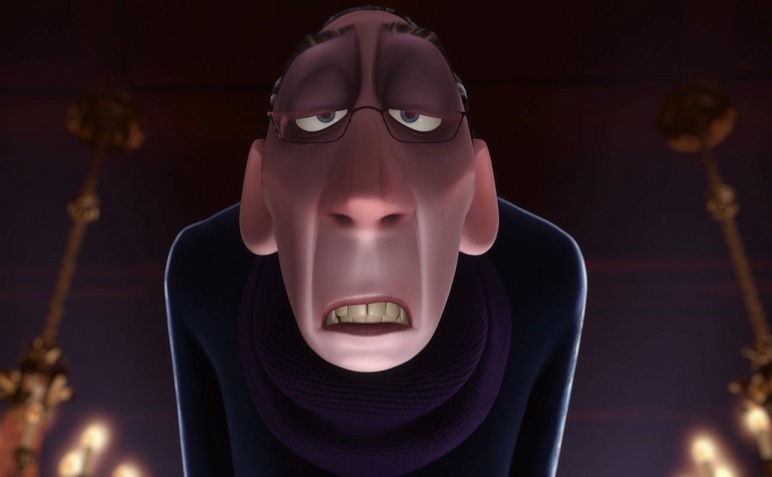
In many ways, the work of a critic is easy. We risk very little, yet enjoy a position of authority over those who offer up their work — and their reputations — to our judgment. We thrive on negative criticism, which is fun to write and even more fun to read. But the bitter truth we critics must face is that, in the grand scheme of things, the average piece of junk is probably more meaningful than the criticism designating it so. But there are times when a critic truly risks something, and that is in the discovery and defense of the new. The world is often unkind to new talent, new creations. The new needs friends.
— Anton Ego, Ratatouille
Those last three sentences remain my North Star as a movie critic. The search for “the new” is why I keep watching, why I keep writing, and why I keep hoping. Consider me a friend of the new. If the new shows up and everyone else pretends not to recognize it, I’ll be the one introducing it around like it is family.
Yet being a critic today is not only about defending the new — it’s about defending the standards by which anything can still qualify as new.
Every Christmas break, there’s a scene at the kitchen counter where my brother-in-law teases me for my allegedly “low” three-star ratings of CODA, Sinners, or Wake Up Dead Man: A Knives Out Mystery.
He shakes his head and says, “Those movies were unbelievable! Why not give them four stars or higher?”
I jab back with the old David Spade/SNL quip: “I saw CODA when it was called Mr. Holland’s Opus; Sinners when it was called From Dusk Till Dawn; and Wake Up Dead Man when it was better as the original in the series.”
Call it smug or pretentious — I call it an occupational hazard. When you’ve seen enough films, repetition becomes visible; sometimes painfully so.
Which leads to the first requirement of being a movie critic: You don’t just have to watch a lot of movies — you have to watch the classics.
The classics broke the ground and laid the foundation on which every movie still builds today. Yet for every hundred so-called “movie critic” startup sites, there seem to be a hundred classics left unwatched.
Take the generational social media platform Letterboxd, for example. Letterboxd advertises itself as a global social network for grassroots film discussion and discovery, yet half of its Gen Z and Millennial users haven’t seen foundational staples like The Wizard of Oz, The Godfather, Citizen Kane, Bicycle Thieves, 2001: A Space Odyssey, or Rear Window. These same users will hand out 4.5 stars to the CGI-saturated juggernaut Wicked, unaware that it is essentially fan fiction set in a cinematic universe they’ve never actually visited.
This brings us to the analogy that matters: Complimenting today’s spectacle without knowing yesterday’s foundation is like complimenting your roommate’s Ragu spaghetti without ever tasting your Italian grandma’s sauce. No context, no lineage, just unlimited tolerance for corn syrup as long as it’s pixelated. RottenTomatoes.com enables these lowered standards by pretty much “liking” everything too. Even fresh tomatoes can be pressed to watered-down complacency.
This is why my five-star ratings are rare. I reserve them for the groundbreakers — the pioneers, the originators, the firsts. The films that created the recipe. The films that didn’t have templates to copy because they were busy creating the templates everyone copies now. (I saw Joker after it completely plagiarized Martin Scorsese’s Taxi Driver and The King of Comedy.)
And even amid the IP mines and franchise recycling plants of the 21st century, we’ve been gifted more true groundbreakers than one might expect:
David Lynch’s subconscious Rubik’s cube, Mulholland Drive (2001), taught an entire generation that narrative clarity is optional and interpretation is half the sport. The dreadfully endless superhero myth was recast as neo film noir in Christopher Nolan’s The Dark Knight (2008), and nothing DC or MCU has managed to tear the cape since.
The animation of Spider-Man: Into the Spider-Verse (2018) rediscovered the graphic page. City of God (2002) reinvented crime cinema. Parasite (2019) detonates the long-standing firewall between “art film” and “popular entertainment,” proving that class satire and tonal shifts can coexist fluidly.
I’d also like to include the recent audacious masterpiece, One Battle After Another (2025), which reframes the modern war film by discarding the traditional arc of victory, catharsis, or moral clarity and instead renders conflict as a perpetual psychological disease.
And, finally, as a passionate defender of the horror genre, I believe The Babadook (2014) sparked that legitimized metaphor-driven elevated horror we see in all its copycats today.
The point isn’t that these films are universally beloved — it’s that the medium moved because of them. They expanded cinematic vocabulary. They forced influence. They altered recipes. They deserve the five stars, not the “fresh” tomatoes RottenTomatoes hands out like candy.
Which brings us back to the kitchen counter.
My brother-in-law, who thinks I’m “too harsh” with my three-star ratings, has probably seen a couple of the films I mentioned above — enough to recognize good sauce, but not enough to know where the family recipe comes from. Meanwhile, he thinks I’m underrating the jarred stuff.
Enjoyment is not the enemy of criticism. Without the context of the classics, it’s easy to mistake banality for innovation. If you’ve never tasted Nonna’s sauce, you can’t insist the Ragu is a masterpiece.
And that, in 2026, is the quiet job of a critic: not to police taste, but to preserve context and remind audiences what cinema has already accomplished, so they can recognize what it still might.
Thank you for reading, let me know what you think, and Happy New Year!
Reely Bernie
 Reely Bernie
I get where you’re coming from. It’s frustrating that young people haven’t seen the classics that a lot of movies draw inspiration from. That’s why I refuse to watch most parody movies until I’ve seen the movies that are being parodied. That being said, a new movie can still put a good spin on a previously seen concept. Even totally original films can be bad especially when they go out of their way to be subversive. I guess it just depends on the movie and your personal enjoyment of it. Of course my perspective is different from most 30 year old movie watchers.
LikeLiked by 1 person
“Even totally original films can be bad especially when they go out of their way to be subversive.” Great point, MasterMix. I wonder if claiming originality to movies that are clearly cookiecutters is a different reaction as well. Today, we see too many replicas, but our younger audience doesn’t know they are replicas. Good on them, but I get bored with the “been there, done that.” I’ll leave with this: there should be a classic movie list requirement for all humans to see before they die, haha!
LikeLiked by 1 person
I would support the decision of a required classics list. Ironically, I just reviewed Wake Up Dead Man today.
LikeLiked by 1 person
Great review, but I was disappointed in the movie. First and foremost, Josh O’Connor is outstanding with the face and composure of a priest, but he is the only one to root for in this third romp. Even ole Benoit Blanc grows tiresome in his understandable but dull agnostic ways. Wouldn’t a hint of spiritual explanation add more depth to this dark tale? It is definitely the darkest one and in greater need of the contrasting humor we saw in the first (original) movie. The more I reflect on it, the more the fun gets sliced by overly despicable characters who chew up too many minutes. Kind of like the house in “Sentimental Value,” I found myself longing more for the church than the people!
LikeLiked by 1 person
I agree, Bernie. Wasn’t Rotten Tomatoes named for the right to criticise? Now, everything is wonderul. I must take another drive up Mulholland. It’s been so long. David Lynch has always been new, in the right sense.
LikeLiked by 1 person
Back in the late 90s and early 2000s, RottenTomatoes set the standard for film criticism online, as it confirmed the validity of the critic and their journalistic and/or academic experience. Since the 2010s, it qualifies anyone with quality over quantity via blog sites, podcasts, and self-proclaimed publications. It goes without saying that most of these “critics” are young and haven’t seen Citizen Kane or, heaven forbid, a silent film. Yes, David Lynch (RIP) is America’s oddity and most innovative in tearing at the fabric of tonality in movies. Thank you for your share, Shane! Safe travels! Go Arsenal! (haha)
LikeLiked by 1 person
Arsenal are going well this year, Bernie. Maybe their first league title or 22 years.
LikeLike
Typos, eh? … you may indeed be a goof, but you are also good. 😀 😀
LikeLiked by 1 person
I think being called a “goof” is the highest compliment, so thank you 🙂
LikeLike
Well said, goof Sir, well said. 😀
LikeLiked by 1 person
Hear! Hear! Write ON, brother.
Opinions of one are no more, or no less, valid than another’s.
At times, they can just be more entertaining.
May the films of 2026 engage and inspire.
As critics, we’re all in with our so very simple mantra, “Just be good already.”
LikeLiked by 1 person
“Just be good already,” indeed! Good people sharing good thoughts about good movies. It’s a wonderful thing! I hope this is a good year for you and your fam, John!
LikeLiked by 1 person
Greetings from Greece! Although I am not a professional critic, not even an amateur one, I agree with your post! Masterpieces are the works which create something new artistically speaking. Thank you very much!
LikeLiked by 1 person
Thank you for chiming in, Ghiorgos! Wow – Greece. Bucket list for sure. Yes, lots of movies and lots of classics help create a seasoned critic, I believe. The journalist and academic critic probably land on a more productive and popular level, but I do think a regular “Joe” like me can make a valid point after exploring the classics from Chaplin to Fellini to The World of Apu (and so much more to catch up on).
LikeLiked by 1 person
Indeed! The only good way to become a good viewer, which is the first step to becoming a good critic, is, of course, to watch as many classic films as possible and to be curious, constantly searching for something new! And to appreciate every good effort, no matter how “small@ it may seem. Not all films have to be masterpieces, after all!
LikeLiked by 1 person
This mornin I find a good tomato growing near my porch – the sun hits just right as a family of rabbits fertilize. You could consider. And speaking of tomato, you can call me Paul by the way, I have a groundbreaker to encourage your watching: Nonnas, starring your boy Vince Vaughn and Netflix. Tell me that sauce doesn’t grab yah! Amen and with your spirit 🍅⛪️
LikeLiked by 1 person
Fr. Paul! Great to hear from you. The barbeque after mass is still a non-event at our school, thanks to your budget consideration. There have been no complaints. Yes, Nonnas was delightful and full of tomatoes, and a sauce that “grabbed me.” I wish you and your rabbits well. Thank you for chiming in, bro 🙂
LikeLike
This is spot on and I’ve had the same conversation myself (and I’m very happy to say I enjoy new films!) when people have queried why I don’t get as excited about some of the latest releases and I say I often feel like I’ve seen it all before and it didn’t do anything new. It’s something that I’m learning about all the time as I try and see more and more of those foundational works of film-making (particularly silent film which I was woefully behind on)- and means I appreciate more and more when something you can call “new” actually stumbles into view.
LikeLiked by 1 person
Dear Alistair Nunn, thank you for your share. Your reviews and perspective are profound, and I respect your opinion. Your response reminded me of what one of my students said yesterday: “I want to watch the classics, but I’m worried about how I’ll react because I don’t see black and white movies or old movies…ever.” She is 16 years old and has a point: it can be daunting at first. However, like Roger Ebert always said, it’s all about diving in and coming to an opinion later in life. For example, I detested and didn’t understand Cassavetes’s “A Woman Under the Influence” when I saw it in my late teens. Today, after experiencing and empathizing the struggles of mental health and family dysfunction in my profession, this movie couldn’t be any more real and fulfilling. Regarding the “silent film” canon you bring up, I also have a lot of catching up to do. However, every gem I watch makes me wonder how it was received 90 years ago (Charlie Chaplin) and how its impact has been embraced, altered, or further explored today. In a beautiful way, my heart melts at Chaplin’s smile and hijinks, and I yearn for such innocence today.
LikeLike