In James Gray’s films, the American Dream is a family business, and every shortcut out of the outer boroughs comes with a blood debt. These are good people chasing a better life, only to put the people they love at risk along the way.
I remember renting The Yards (2000) from my local Hollywood Video in Spokane, Washington, and thinking it felt like The Godfather on a smaller scale with a bigger guilty conscience. Joaquin Phoenix and Mark Wahlberg were still establishing themselves as leading men, and Gray’s intimate dramas felt worlds away from the science fiction he would later explore in Ad Astra (2019). Even in space, though, the man can’t escape daddy issues.
With Paper Tiger, Gray returns to the territory of The Yards, We Own the Night (2007), and Little Odessa (1995): New York’s criminal underworld, where bonds of blood collide with ambition. You want these families to get ahead, but they always seem to be at the wrong place at the wrong time.
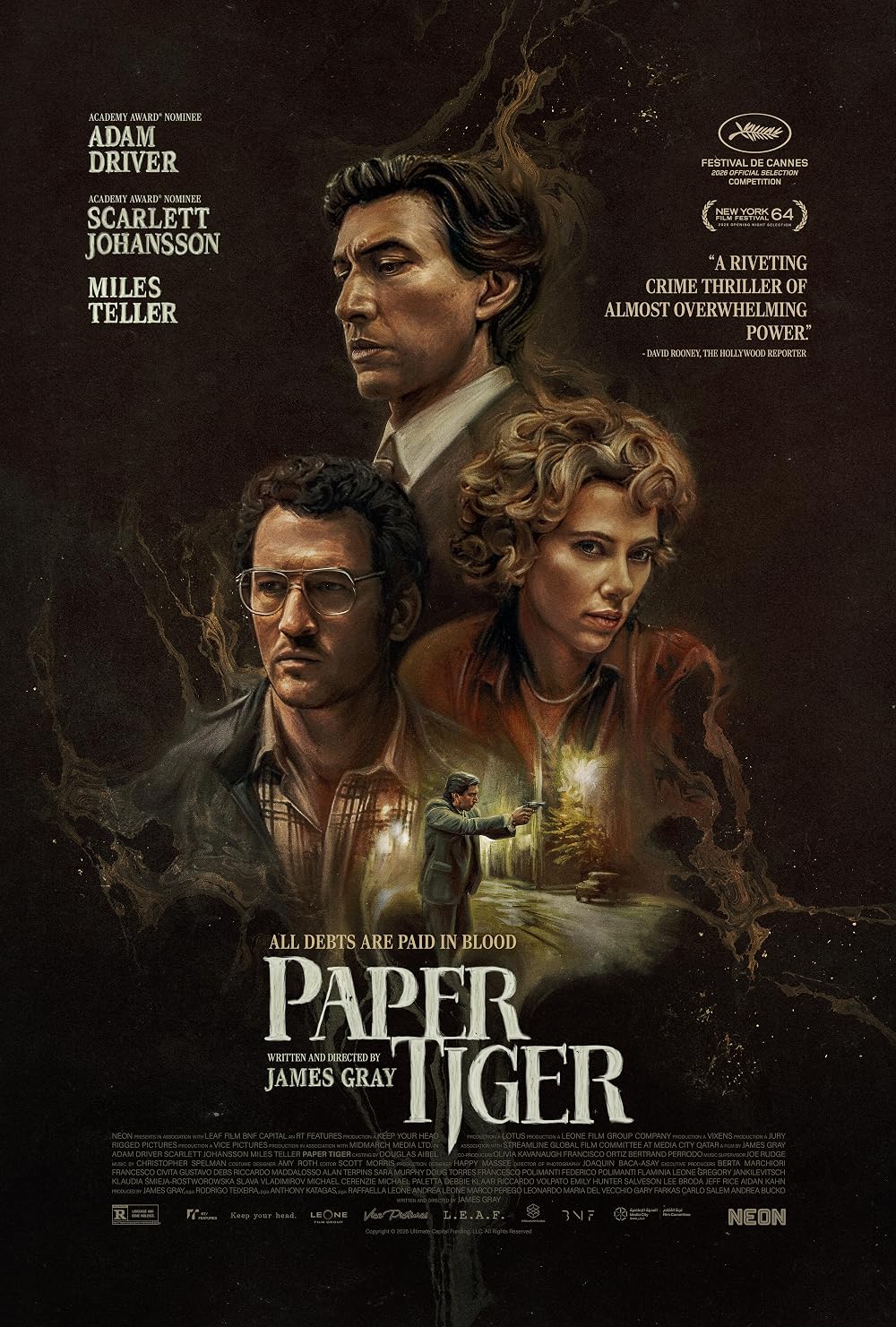
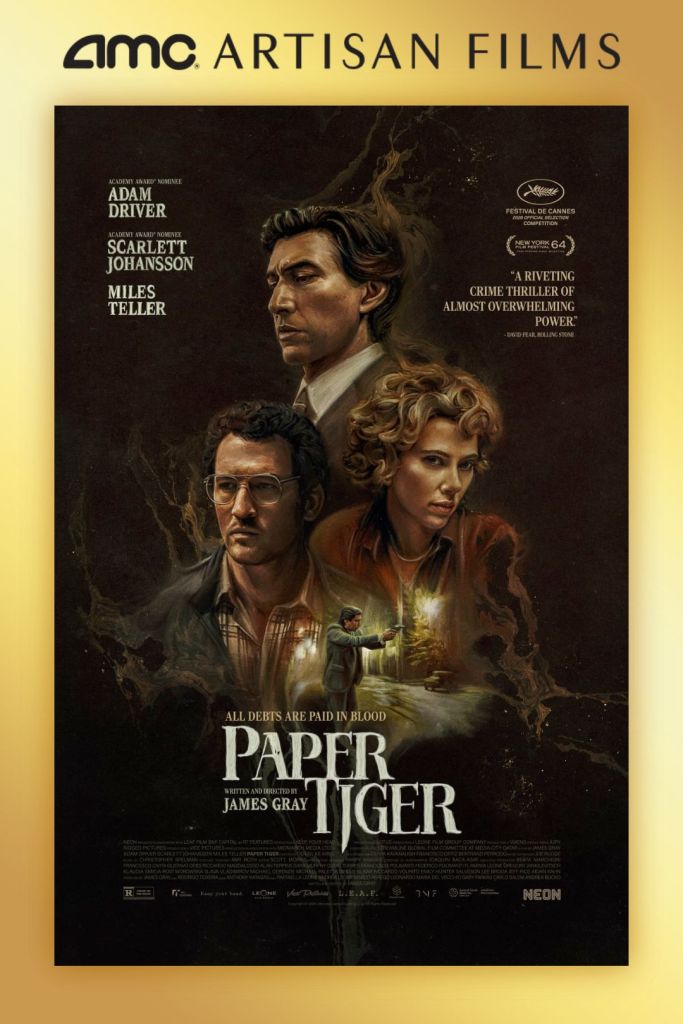
Set in 1986 Queens, Paper Tiger follows engineer Irwin (Miles Teller), who joins his ex-cop brother Gary (Adam Driver) in a lucrative business venture that entangles them with the Russian mob. Their shot at financial security becomes a fight to protect Irwin’s wife, Hester (Scarlett Johansson), and their children as the deal unravels.
Teller, Driver, and Johansson give the family’s desperation a pulse, making even their questionable decisions understandable. The ’80s outer-borough atmosphere is just as convincing. Gray makes you feel at home here, then slowly reveals what it costs to stay.
Unfortunately, the score seems overly concerned that we are watching a tragedy. Where the actors transcend melodrama and earn our empathy, Christopher Spelman’s music pulls them back into lushly strung theatrics. A frequent Gray collaborator, Spelman could stand a lesson on subtlety.
What lifts Paper Tiger above the standard crime drama is its understanding of a particular strain of ‘80s family culture: feelings stay quiet, pride speaks loudly, and providing for your family is supposed to explain everything you do. A few parenting decisions might raise eyebrows today—and possibly warrant a phone call—but they fit these adults’ belief that they know what’s best, even as the kids get pulled into the mess.
Gray understands how wanting more for your family can become an excuse for putting everything you already have at risk. That’s what makes Paper Tiger stick: beneath the bad decisions are people worth rooting for. The score could lower its voice. The family drama speaks for itself.
Paper Tiger (2026) ***1/2


Leave a Reply