You Can See Everything (2026) is the most fascinating documentary I have ever seen—perhaps because it is less a documentary than a piece of performance art. The mania lies somewhere in between.
Most of us know the story: Elizabeth Holmes founded Theranos, a company that promised revolutionary technology capable of running an array of blood tests using just a few drops of blood. The technology failed to deliver what she advertised, and she was convicted of defrauding investors and originally sentenced to 11 years and three months in federal prison. Her former boyfriend and Theranos executive, Ramesh “Sunny” Balwani, was separately convicted of fraud; Holmes testified that he abused and controlled her. She later formed a family with Billy Evans with whom she has two children.
In You Can See Everything, Evans’s management of her finances and public image—including his stated power of attorney—raises troubling questions about control. What he presents as devotion often comes across as a performance fueled by ego and self-importance.
Essentially, everyone is “performing.”
I am unfamiliar with the previous work of filmmakers Nathan Fielder and Lance Oppenheim (I’ve never had HBO), but they have the cringe humor, uncomfortable silences, and extremely telling close-ups down to a tee. Fielder’s unfiltered questions and blasé demeanor make him a subject worth studying, even when he seems to be lurking behind the corner. His behavior is odd. He is odd. And yet, who better to interview the even odder Elizabeth Holmes? Fielder even admits to feeling insecure about his lack of the scientific background needed to understand her invention. Oppenheim’s camera seems as interested in watching Fielder as Holmes, and Fielder eventually plays himself in reenactments.
Speaking of reenactments, Amanda Seyfried, who previously portrayed Holmes in The Dropout, steps in to play her again when the real Holmes becomes unreachable in prison. Her approach is deliberate and searching, an attempt to get beneath the surface rather than merely imitate a controversial figure. The only problem is: she can’t quite reproduce that unsettling stare.
It’s all about the eyes.
Look at the whites of Billy Evans’s wide eyes. My goodness, he gives the grandest performance of all, spewing technobabble and grandiloquence until we see a cornered puppy beneath the bravado. The camera closes in on those fearful, owl-like eyes. It is unsettling.
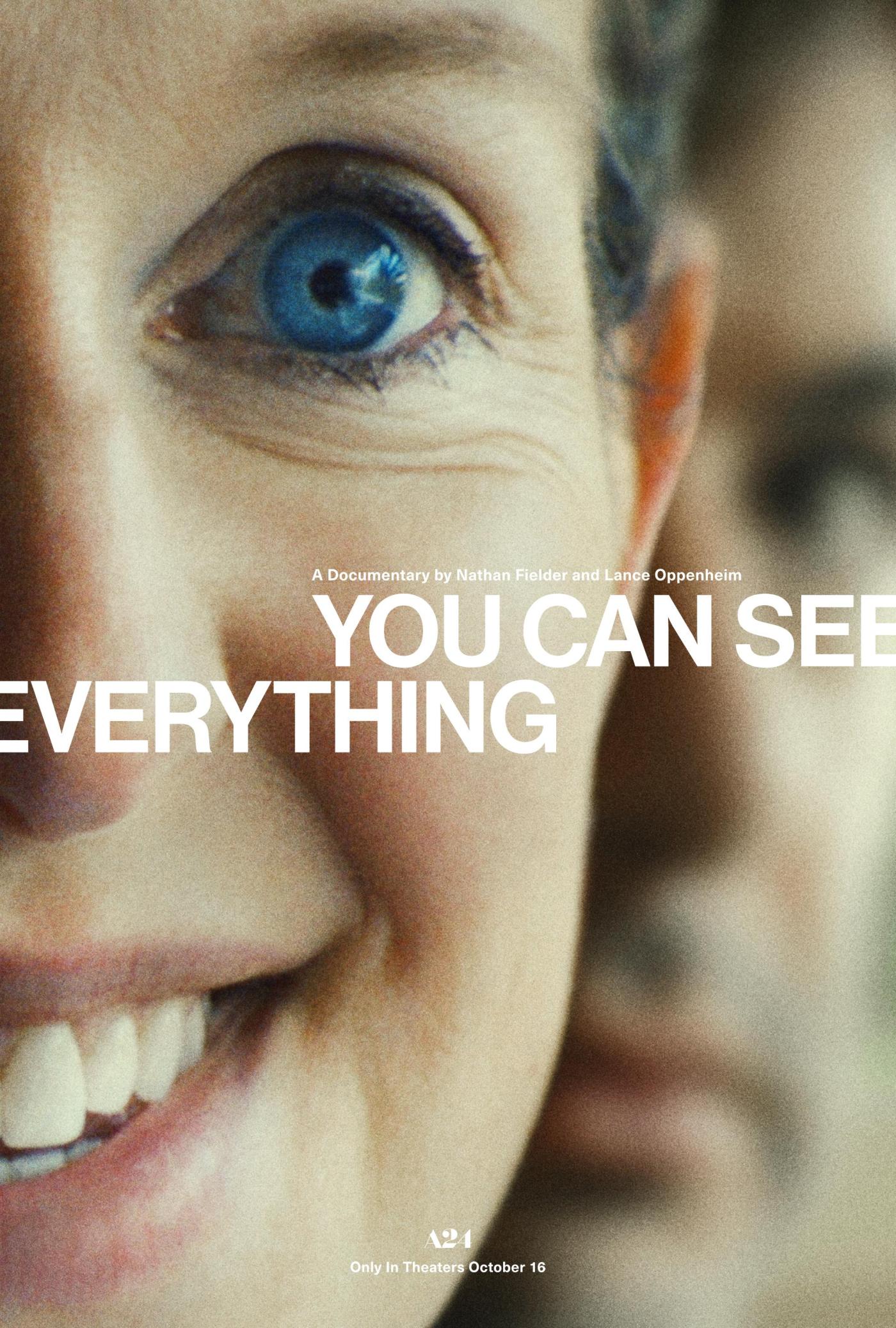
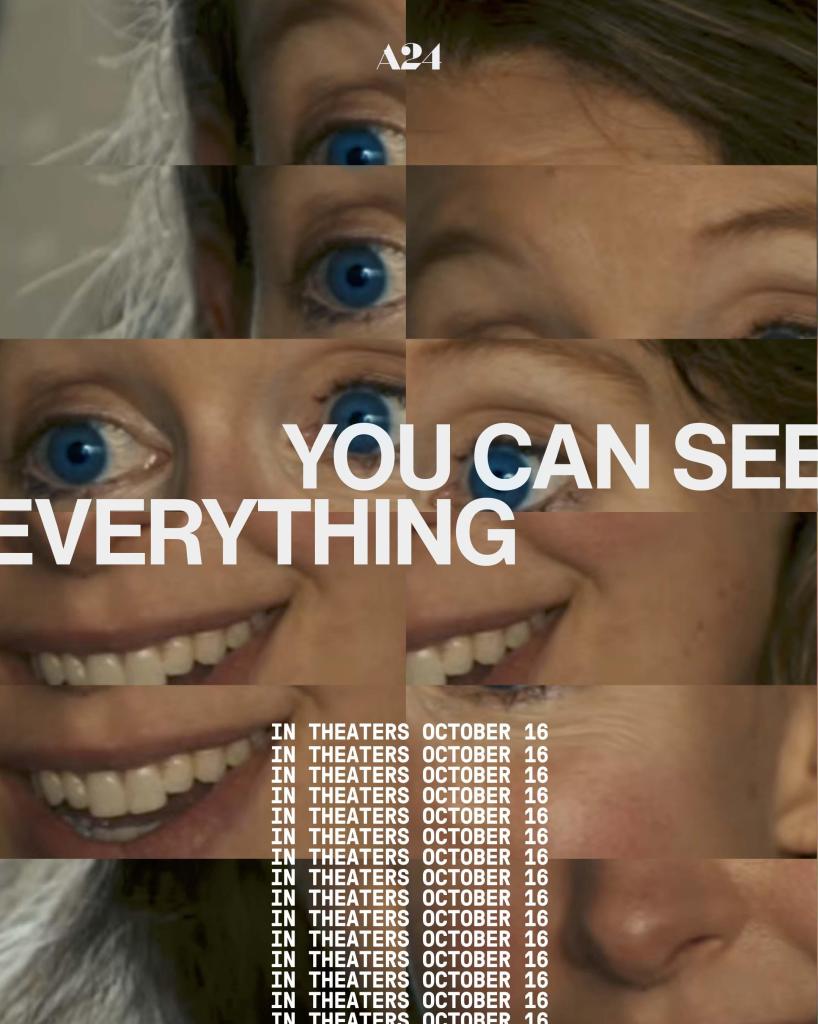
Popular culture tells us that when liars keep their eyes wide open and stare too intensely, they are usually overcompensating to counter the popular myth that liars avoid eye contact. In this movie, the stare becomes part of the performance. Just look at Elizabeth’s eyes on the poster. Paired with that cemented-on smile and calming voice, her gaze seems to bore straight through Fielder’s soul during their interviews. My fellow theatergoers and I couldn’t help but squirm.
Throughout the movie—which is probably a good thirty minutes too long—I kept thinking about people whose fabricated stories became their public identities: Tania Head, who falsely claimed to have survived the September 11 attacks; Belle Gibson, who built a wellness empire on a fabricated cancer story; and, Brian Williams’s helicopter-under-fire fiasco. I found myself wondering where calculated deception ends and belief in one’s own mythology begins. Whatever the answer, there always seems to be someone nearby willing to enable.
You Can See Everything lets us stare until our eyes hurt. Whether anyone ever drops the act is another matter. The ambiguity makes for a stellar performance.
You Can See Everything (2026) ****1/2


Leave a Reply